
Highwall Miner
A portion of the first chapter of a novel that I am writing at great speed.

Below is the first 2000 or so words of a novel that I aim to write in 30 days, at a rate of 2000 words a day. I am not sure whether 60,000 words will be enough to finish it, though it hardly matters. What exists is in the form of a first draft and is likely to remain in that state as 2026 is already spoken for. I will publish my Soviet thriller in April and then I will return to working on my psychedelic pirate novel which, on paper, is a quarter done, though in reality it is nowhere near that. It is a very violent book. I am struggling to get one of the antagonists to work. He is an odd man who repeats his mistakes. I am also developing old and new material for a collection of short stories themed around journeys.
The book quote that prefaces the chapter is fictional.
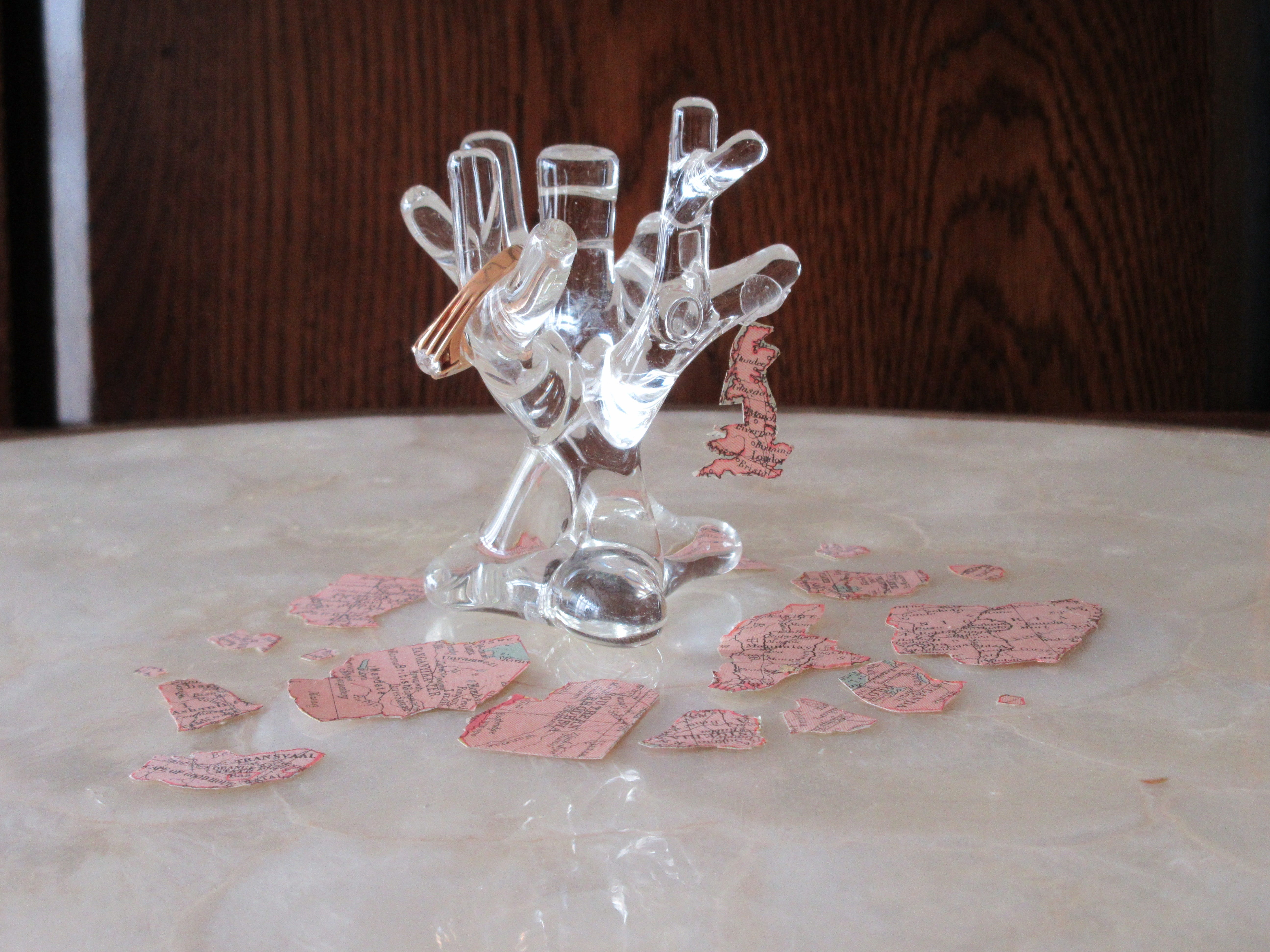
“The heart of London, which is made of ancient stone, was broken from the very beginning. The boulders that were hauled from across Britain to the site of the Capital, were raised to form its first buildings of substance. The drag marks they left behind in the clay became the first roads. Again and again, the City was dismantled to its component parts; the old founding stones, tamed by the mason’s chisel, scattering like a flock of grey pigeons, resettling in a new location a short distance from where they previously stood. The historians who track the stones’ movements through time and space, and who argue over their provenance are, on one matter, all in agreement: Wherever they converge, be it somewhere on our own shores, or within the borders of a foreign nation, they will always mark the true location of the City of London.”
- Carole Deller, The Social Geology of London
The 1948 revolution against the British was fuelled by breadcrumbs swept from bare cupboards. It was all we had. That and our hearts. The spark that kindled the civil conflict in 1954 was present even before then. It was a fight over crumbs that were clawed from the soil where, only a few years earlier, we had buried our war dead – precious stones and certain rare earth metals that were coveted in other parts of the world. Unlike these two examples where the causes are well-known, it is hard to say where or when the Lomba revolution was incited. Some people think that the fuse was long and slow burning; that it was lit many years ago when the police broke down a door in Cololedo; that a bible falling from a shelf, opening on a certain page, was the cause of all the trouble. There are some who believe that it began even before then, with the bank robbery in 1969.
What can be said with certainty is that this slumbering insurrection was awakened early in the spring of 2020, not by a Rambengun or a Boartaygehan, but by a native Englander: On the 25th March, a man named John Chase – a journalist, who worked for a newspaper called The Fairlead – stepped down from a London bus that had paused with the eastbound traffic along Piccadilly. He walked towards his reflection in the windows of Weatherhills. Above his head, a cascade of red flowers trailed, along with their foliage, through the iron filigree of a first-floor balcony rail that stretched across both flanks of the corner building. He followed the passage of the midday sun that was shining the length of Old Bond Street, the crisp light spotlighting the columns of saluting flags, pledging allegiance to various designer brands, that protruded from the walls of the buildings on short poles, raised at shallow angles.
The sun was finding solid form in the gleaming arcs of polished gold that were laid out in crowded rows behind the grilled window of Meskin’s Jewellers. As Chase passed the display, his left hand found its way subconsciously into the side pocket of his suit jacket. He experienced a split second of silent panic that ended abruptly when he made contact with the flat central pane of the oval-cut emerald. The ring had been warmed by his body heat. His fingertips sketched the dimensions of its moated socket, slightly raised above a circular pebble beach of crushed diamond. The facing was supported at the sides by a pair thick of shoulders inset with rectangular panes that were embellished with more crushed diamonds. The shackle had been made for someone with much larger hands. Even his thumb was too slender for it.
Further along the road, the sun was unhooding a stone head that emerged, like a barely-formed gargoyle, from the converging shadows of an unadorned Georgian facade, at the northern end of the first floor. The building was part of a short terrace, sandwiched in-between a dark block of Victorian brown brick and a neoclassical cornerstone property; the London headquarters of a world famous fashion house. The head had been carved in a primitive style. It resembled something that had once lain dormant in the stone, first revealing itself to mankind as a prophecy that was eventually fulfilled, and now lingering as a warning from history. The coarsely chiselled face wore an agonised, open-mouthed expression. A few capital letters, sloppily engraved in a cement panel underneath, identified it as a likeness of Macbeth. At the south end of the first floor, a second head, whose drawn and haggard visage had already been revealed by the sun, was labelled ‘Lady Macbeth’. Both were angled slightly towards each other, as though in a final desperate attempt to make eye contact.
On the ground floor, a row of four square columns, painted gold, functioned as door and window frames, trimmed with bright red wood. The name of the establishment – La Table des Acteurs – was spelled out in black capital letters against an unevenly-painted gold backdrop. Behind the central picture window, a pair of red silken drapes, tasselled along the edges with braided gold, had been partly drawn back in grand pleated arcs, like theatre curtains, revealing a green table for two that was pushed up against the glass. The crumpled faces of a pair of elderly women, their grey hair styled to oily pastel smudges, were hunched in profile, facing one another in the moth-bitten gloom. Both were dressed sombrely in buttoned-up Victorian garb, one with a brown fur stole draped across her shoulders. A three-tiered silver platter of sandwiches, resting on a lace doily, occupied the wooden space between them. A china teapot, pushed to one side on a separate doily, was decorated with ruffled pink and yellow flowers. The women sat in apparent silence, their pinched, bony fingers pecking at the paltry contents of their small plates; the folds of their necks rising and falling as they awkwardly swallowed small mouthfuls of tea from cups bearing an identical pattern to the pot.
Behind the plate glass window next door, a procession of vaguely cube-shaped boulders, shored up with banks of moss, speckled with white flowers, projected along the centre of a minimalist boutique. At the far end of the rock garden, a pair of featureless, shiny white mannequins clothed in patterned black and white dresses were seated at different levels on a platform made from white blocks. The lacquered surfaces of the boulders gleamed under the spotlighting embedded in the white ceiling. Collages of faint grey shadow smudged the white floor, the corrugated walls of grainy, buff-coloured cement, and the long glass shelves, each thick pane supporting a pair of large designer handbags.
The two-metre, crystal punch bowl, on permanent display in the window of Campens had been made by hand for the Great Exhibition of 1851. The light prisming through the intricately cut glass was scattering a constellation of rainbow fragments that moved in unison under the direction of the sun across the pavement, projecting onto the clothing and the bodies of pedestrians, adding a sheen of iridescence to the oil-black chassis of a crawling London taxi; faintly garnishing the grainy stone walls of the buildings opposite. Inside Venman & Son Jewellers and Watch Repair, the spectra endured as over-stretched washes of faded colour that moved slowly over the fixtures on the shop floor.
“If you wait long enough, everything will eventually wash back in on the tide...” said Henry Venman, sounding like he might be quoting someone. “...Everything you have ever loved and ever lost.”
He was a handsome man in his late twenties, youthful in appearance but prematurely aged by his circumstances. A thick head of chestnut hair was swept into a side parting. An underlying peevishness haunted his angelic features. Untroubled by the faint rainbow that was being projected onto the more prominent side of his asymmetric lantern jaw, he held the watch up to the light. His pale grey eyes, that changed colour with their surroundings, studied the layered, jigsaw puzzle framework that held the various gears and springs in place.
Have you ever seen one of these John?”
“It’s a diver’s watch,” said Chase.
“A bloody expensive divers watch is what it is. This is a custom job. Ordinarily it would have all the usual sub-dials on the face. There would be a bezel here…” His finger traced the circumference of the brushed metal frame that was held in place by eight tiny hexagonal screws. “...People who aren’t going to use them for dives, which let’s face it is practically everyone, often like to expose the mechanism. That is if they can afford the work.” He turned it over and read the inscription of the back:
“‘Forever is such a long time, my love.’ Well, evidently he gave up waiting. Here, feel its weight.”
Recently I self-published a themed collection of short stories, titled ‘Boiled Branches, Green Wood: A Book of Trespassers’. It is available from Amazon as a paperback or an eBook. The link below will take you to the paperback version on the Amazon UK website, though it can be purchased anywhere in the world.